


Rising prices, higher utility bills, and uncertain income make it hard for many families to end the month with money left over. A realistic Monthly Budget in Pakistan shows where your rupees go, helps you cut waste, and gives you a plan for emergencies. This guide covers the steps, from setting up your first budget to saving as a family.
How to Create a Monthly Budget
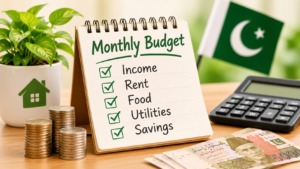
Learning how to create a monthly budget takes four simple steps:
- Calculate your total income. Add your salary, business earnings, rent income, and any side income. If your income varies, use your lowest recent month as the base.
- List every expense. Check your bank, JazzCash, or Easypaisa history and your receipts so
 nothing is missed.
- Sort expenses into categories. Use needs (rent, food, bills), wants (dining out, shopping), and savings.
- Compare and adjust. If spending is higher than income, trim the wants first.
Use a notebook, an Excel sheet, or a free budgeting app. The tool matters less than checking it regularly.
Monthly Budget Planning
Good monthly budget planning starts before the month does. Sit down in the last week of each month and plan the next one. Add known costs such as school fees, Eid shopping, weddings, or insurance premiums.
A popular framework is the 50/30/20 rule: 50% of income for needs, 30% for wants, and 20% for savings. In Pakistan, where rent and food often take a bigger share, you might begin with 60/20/20 and improve gradually. For example, on an income of Rs. 100,000, that would mean Rs. 60,000 for needs, Rs. 20,000 for wants, and Rs. 20,000 for savings. These numbers are only an illustration, so adjust them to your own situation.
How to Save Money in Pakistan
If you are wondering how to save money in Pakistan, the most reliable method is to pay yourself first. As soon as your salary arrives, move your savings amount into a separate account before you spend anything else.
Other practical steps include:
- Buying groceries in bulk from wholesale markets or during sales
- Comparing prices online and offline before large purchases

- Using public transport or carpooling when possible
- Cutting back on unused subscriptions
Even small amounts add up when you save every month without exception.
Personal Finance Tips in Pakistan
Strong personal finance tips in Pakistan go beyond budgeting. Here are the basics:
- Build an emergency fund. Aim for three to six months of living costs, kept somewhere easy to access.
- Avoid high-interest debt. Credit card balances and informal loans can drain your income quickly.
- Protect against inflation. Cash loses value over time, so consider options such as national savings schemes, mutual funds, or gold after doing your own research.
- Keep records. Track your spending so you can see patterns and correct them.
Rates and rules change, so check current terms with official sources or a qualified advisor before investing. This article is general information and not financial advice.
Monthly Expenses in Pakistan
Typical monthly expenses in Pakistan include:
- Housing: rent or home maintenance
- Utilities: electricity, gas, water, internet, and mobile
- Food: groceries and household supplies
- Transport: fuel, rickshaw, ride-hailing, or public transport
- Education: school or tuition fees
- Healthcare: medicines and doctor visits
- Irregular costs: repairs, gifts, and religious or social events
Electricity bills often change with the season, so average your summer and winter bills when planning. Separate fixed expenses from variable ones, because variable ones are where you can save most easily.
Budget Planning for Beginners
Budget planning for beginners works best when it is simple. Do not try to track every rupee on day one. Start by tracking only your five biggest expense categories for one month, then look at the results.
Common beginner mistakes include forgetting irregular expenses, setting unrealistic limits, and giving up after one overspent month. If you overspend, adjust the plan rather than abandoning it. Treat the first three months as practice. Your budget will improve as you learn your real spending habits.
Money Saving Tips
These money saving tips can be applied right away:
- Make a shopping list and stick to it.
- Wait 48 hours before any non-essential purchase.
- Cook at home more often and cut down on food delivery.
- Switch off lights and appliances to reduce electricity use.
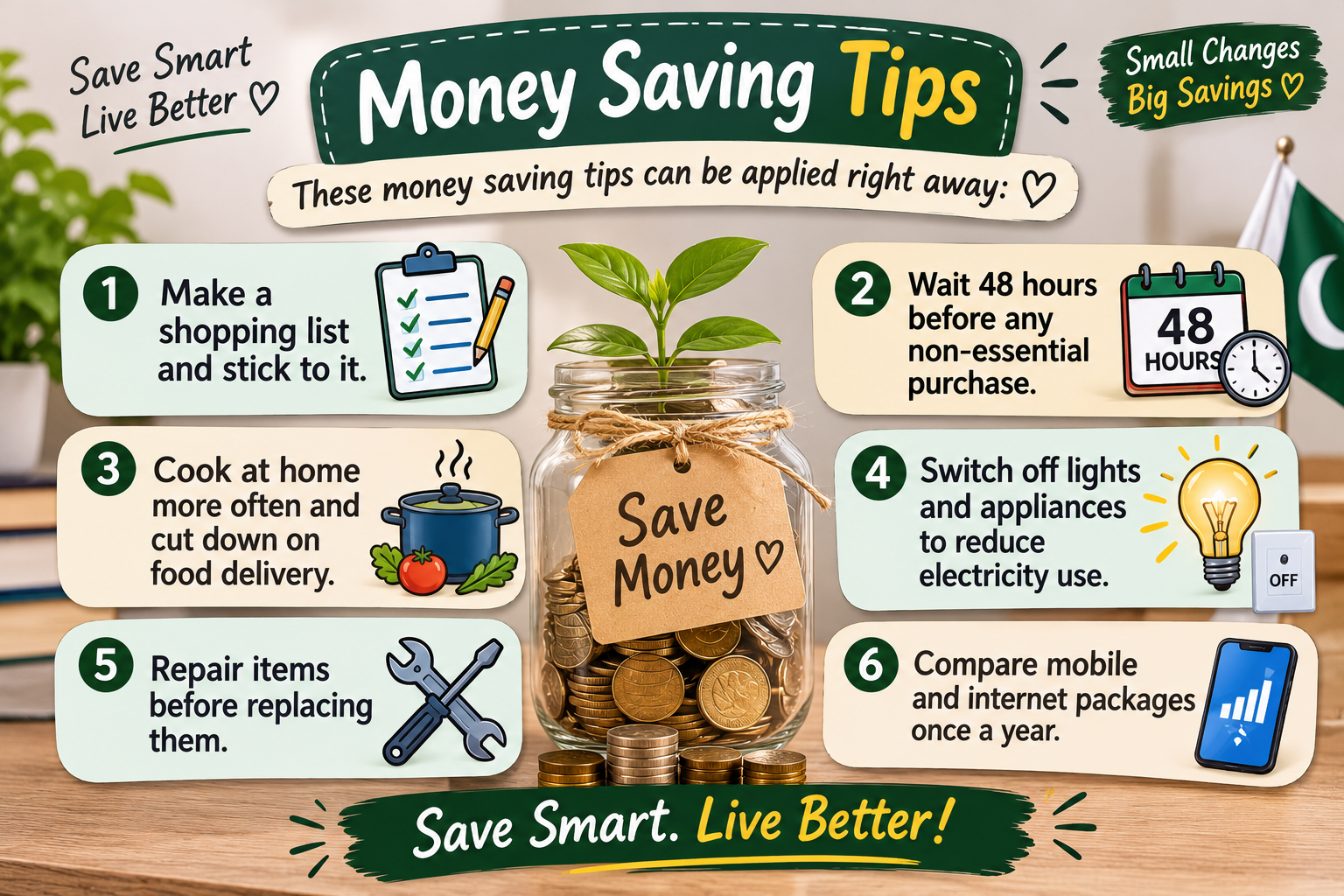
- Repair items before replacing them.
- Compare mobile and internet packages once a year.
Automate your savings if you can, so you do not have to rely on willpower alone.
Household Budget in Pakistan
A household budget in Pakistan often covers more than one earner and several dependents, so communication matters. Hold a short monthly meeting with your spouse or family members to review spending and agree on priorities.
Assign someone to track bills and due dates to avoid late fees. Include extended family support in your plan if you provide it, so it does not come as a surprise. Teach children basic money habits early by giving them a small allowance with simple savings goals.
How to Manage Monthly Income
Knowing how to manage monthly income is especially important if your earnings are irregular. Freelancers, daily wage workers, and small business owners can use these steps:
- Base your budget on your lowest typical month.
- When you earn extra, split it between savings, debt repayment, and a small reward.
- Keep a buffer equal to one month of expenses to cover slow periods.
- Pay essential bills first, then everything else.
For salaried workers, the challenge is usually the last week of the month. Spreading out big payments and avoiding early spending can help you reach the next payday comfortably.
Saving Tips for Pakistani Families
Practical saving tips for Pakistani families are most effective when everyone takes part:
- Join a committee (BC) carefully. A committee can work as a forced savings method, but only join trusted groups.
- Plan for big events. Start setting aside money months ahead for weddings, Eid, and Ramadan.
- Share costs. Carpool, buy in bulk with relatives, and reuse school books.
- Set a family goal. A shared target, such as a home repair fund or education fund, keeps everyone motivated.
Celebrate small wins together. Reaching a goal feels better when the whole family contributed.